Egyptian Currency Guide for Tourists 2026: Exchange Rates, ATMs & Tips
Planning a trip to Egypt? Understanding the Egyptian currency before you arrive can make everyday purchases, transportation, tipping, shopping, and paying for services much easier.
The official currency of Egypt is the Egyptian Pound (EGP), commonly written as LE or E£. Egypt is still largely a cash-based destination for everyday transactions, especially when using taxis, small shops, local markets, and some smaller restaurants. Cards are widely accepted at major hotels, restaurants, shopping malls, and tourist businesses.
In this Egyptian currency guide for tourists, you’ll learn how the Egyptian Pound works, where to exchange money, how to use ATMs, when to use cash or cards, how much cash to carry, and how to avoid common money mistakes during your Egypt trip.
Table of Contents
- Egyptian Currency: What Money Is Used in Egypt?
- Egypt Exchange Rates in 2026
- Where to Exchange Money in Egypt
- Using ATMs in Egypt
- Cash or Credit Card: What Should Tourists Use?
- How Much Egyptian Currency Should You Carry?
- Tipping and Small Egyptian Notes
- How to Avoid Common Money Mistakes
- Practical Money-Saving Tips for Egypt
- Frequently Asked Questions
Egyptian Currency: What Money Is Used in Egypt?
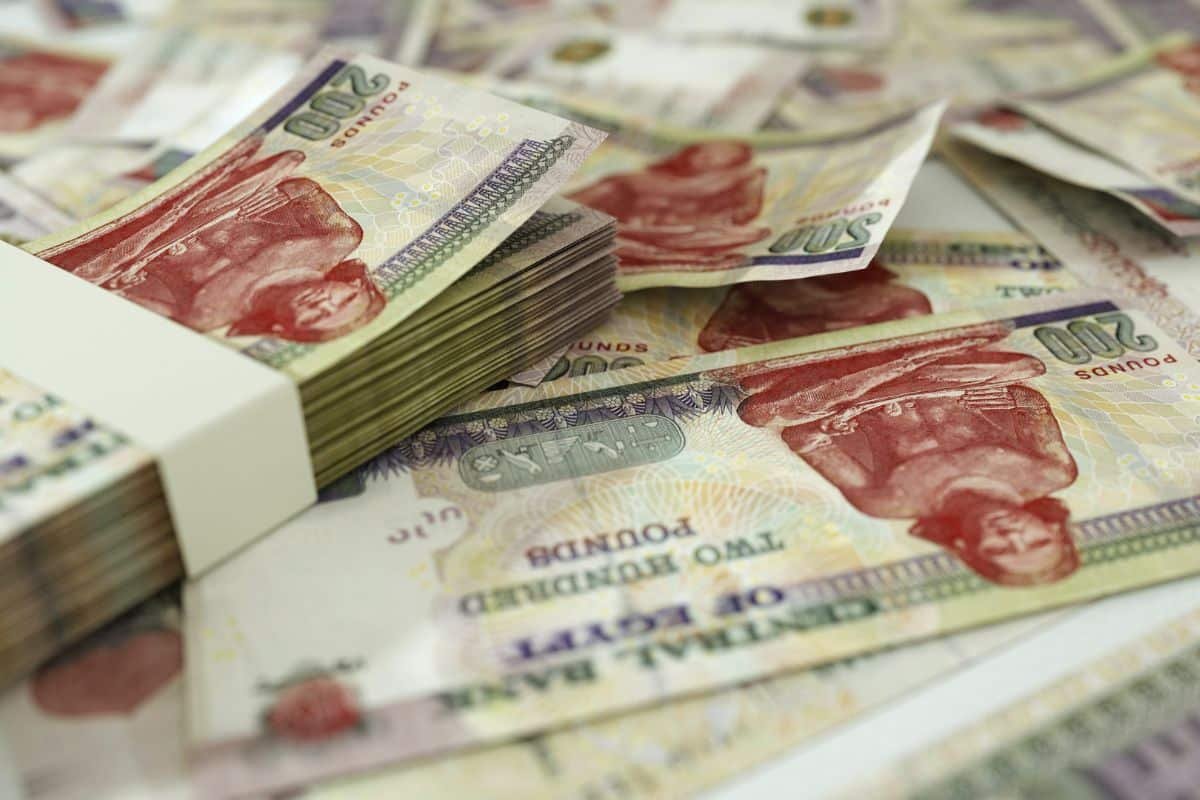
The official currency of Egypt is the Egyptian Pound, with the international currency code EGP.
You may see prices written in several ways:
- 100 EGP
- 100 LE
- E£100
- 100 Egyptian pounds
They all refer to the same currency.
The Egyptian Pound is divided into 100 piastres, and Egyptian banknotes are issued in several denominations. The Central Bank of Egypt provides official information about Egyptian banknotes and their security features.
For tourists, the most important thing to remember is simple:
Prices in Egypt are normally displayed in Egyptian Pounds (EGP/LE).
The Egyptian tourism authority also confirms that currency exchange services are available at major hotels, tourist destinations, and airports, while commercial banks provide ATMs with currency services.
Egypt Exchange Rates in 2026
Exchange rates change constantly, so there is no single exchange rate that should be considered valid for the entire year.
For example, the Central Bank of Egypt’s published rates on September 24, 2026 were approximately:
| Currency | CBE Buy Rate | CBE Sell Rate |
|---|---|---|
| US Dollar (USD) | 51.71 EGP | 51.85 EGP |
| Euro (EUR) | 58.81 EGP | 58.98 EGP |
| British Pound (GBP) | 68.40 EGP | 68.61 EGP |
These figures are provided as a dated example, not as a fixed 2026 exchange rate. Exchange rates can change between the time you read this article and the time you travel.
Before exchanging a significant amount of money, check the latest rates from the Central Bank of Egypt exchange-rate listings or your bank/card provider.
Where to Exchange Money in Egypt
Tourists have several options for getting Egyptian Pounds.
1. Banks
Banks are one of the most reliable options for exchanging foreign currency into Egyptian Pounds.
Major banks operate branches throughout Cairo, Giza, Alexandria, Luxor, Aswan, and other Egyptian destinations.
If you’re exchanging a larger amount, use a regulated bank or licensed exchange provider rather than dealing with individuals offering currency on the street.
2. Licensed Exchange Offices
Licensed currency exchange offices are another option for travelers.
Before exchanging money, check the displayed exchange rate and ask whether there are any commissions or additional charges.
Avoid unofficial currency exchanges or individuals offering exchange services on the street.
3. ATMs
ATMs can be a convenient way to obtain Egyptian Pounds during your trip.
You can find ATMs at banks, airports, shopping centers, hotels, and busy commercial areas.
If you use an ATM, always review the transaction details and any fees before confirming the withdrawal.
4. Airport Exchange Counters
Airport exchange services can be useful when you first arrive, especially if you need Egyptian Pounds for transportation, food, or small purchases.
However, you don’t need to exchange your entire travel budget immediately after landing.
A better approach is to exchange or withdraw enough for your initial expenses and then compare rates before getting more cash.
5. Hotels
Some hotels may offer currency exchange services, but it’s worth comparing the exchange rate and fees with a bank or licensed exchange provider.
For larger amounts, compare your options before exchanging.
Using ATMs in Egypt
ATMs are widely available in Egypt’s major cities and tourist destinations.
You can find them at banks, airports, hotels, shopping centers, and other busy areas.
The Egyptian tourism authority states that commercial banks offer ATMs and that cash is particularly useful for taxis and small shops.
When using an ATM in Egypt, follow these tips:
- Use ATMs operated by established banks.
- Check the withdrawal amount carefully.
- Review any ATM fee before confirming.
- Make sure your bank card is enabled for international transactions.
- Keep your PIN private.
- Avoid withdrawing much more cash than you need.
- Keep a backup payment method with you.
Should You Choose EGP or Your Home Currency?
Some ATMs and payment terminals may offer Dynamic Currency Conversion (DCC).
This gives you the option of seeing the transaction in your home currency instead of Egyptian Pounds.
Before accepting the conversion, compare the offered exchange rate with the rate your bank or card provider would normally use.
When the ATM gives you a choice between being charged in Egyptian Pounds (EGP) and your home currency, carefully review the rate and fees before making your selection.
Cash or Credit Card: What Should Tourists Use?
For most travelers, the best approach is to carry both cash and a card.
Credit and debit cards are widely accepted at major hotels, international restaurants, shopping malls, and many tourist businesses.
However, Egypt remains a cash-based destination for many everyday transactions. The official tourism information specifically notes that cash is important for taxis and small shops.
You may need Egyptian Pounds when:
- Taking a local taxi
- Buying snacks or drinks
- Shopping in local markets
- Visiting small restaurants
- Buying from street vendors
- Giving tips
- Shopping at smaller stores
- Paying for other small services
For larger purchases, your card may be more convenient.
Best strategy: Carry some Egyptian cash for everyday expenses and keep a debit or credit card available for larger purchases and emergencies.
How Much Egyptian Currency Should You Carry?
There is no single amount that works for every tourist.
Your daily cash requirements depend on:
- Your travel style
- Hotel location
- Transportation
- Dining choices
- Shopping
- Number of cash-only purchases
- How frequently you use your card
Instead of carrying your entire travel budget in cash, carry enough Egyptian Pounds for your expected daily expenses.
You should have enough for:
- Transportation
- Food and drinks
- Small purchases
- Tips
- Markets
- Unexpected cash-only situations
You can then withdraw or exchange more money when needed.
Carry Small Egyptian Notes
Having smaller denominations can be extremely useful.
Small notes are convenient for:
- Tips
- Short taxi rides
- Drinks
- Snacks
- Local cafés
- Small purchases
- Markets
If you receive a large banknote after exchanging money, try to break it at a supermarket, restaurant, or other legitimate business.
Small businesses may not always have enough change for large notes.
Tipping and Small Egyptian Notes
Tipping is common in Egypt, particularly in tourism and hospitality.
You may want to keep some small Egyptian notes available for:
- Hotel staff
- Drivers
- Tour guides
- Restaurant staff
- Bathroom attendants
- Other service providers
The appropriate amount can vary depending on the service and your personal preference.
Keeping smaller denominations in your wallet makes these situations much easier.
How to Avoid Common Money Mistakes
Understanding what not to do can be just as important as knowing where to exchange money.
Don’t Exchange Money With Strangers
Avoid exchanging foreign currency with people offering rates on the street.
Use banks, licensed exchange providers, or reputable ATMs instead.
Don’t Carry Your Entire Budget in Cash
You don’t need to walk around Egypt with all your travel money.
Carry what you expect to need and keep larger amounts secure.
Don’t Depend Only on Your Card
Cards are useful, but smaller businesses, local transportation, markets, and some street vendors may require cash.
Having some Egyptian Pounds with you can prevent unnecessary problems.
Don’t Ignore ATM Fees
Your home bank may charge an international withdrawal fee, while the Egyptian ATM may also display its own fee.
Check the information on the ATM screen before confirming the withdrawal.
Don’t Forget to Check Your Change
When paying in cash, take a moment to check the amount of change you receive.
This is particularly useful when shopping in busy markets or making several small purchases.
Practical Money-Saving Tips for Egypt
Here are some simple ways to manage your travel money more efficiently.
1. Compare Exchange Rates
Don’t automatically exchange all your money at the first location you see.
Compare the rate and any fees before making a larger exchange.
2. Check Your Bank’s Foreign Transaction Fees
Before traveling, check whether your bank charges fees for:
- Foreign transactions
- ATM withdrawals
- Currency conversion
A travel-friendly card with reasonable international fees can help reduce unnecessary costs.
3. Withdraw Reasonable Amounts
Avoid repeated tiny ATM withdrawals if your bank charges a fixed fee for each transaction.
At the same time, don’t withdraw much more cash than you expect to spend.
4. Keep an Emergency Payment Method
Bring at least one backup card and keep it separate from your main wallet.
This can be useful if your primary card is lost, blocked, or damaged.
5. Keep Cash Secure
Avoid displaying large amounts of cash in public.
Keep the majority of your money secure and carry only what you need for the day.
Egyptian Currency for Different Types of Travelers
Budget Travelers
If you’re traveling on a budget, cash will often be useful for local food, small shops, transportation, and markets.
Keep small notes available and compare prices before buying souvenirs or services.
Luxury Travelers
Luxury hotels, upscale restaurants, and many organized tour companies generally accept cards.
You should still carry some Egyptian Pounds for tips and smaller expenses.
Families
Families may find it useful to carry a mixture of cash and cards, especially when traveling with children and making frequent small purchases.
First-Time Visitors
If this is your first trip to Egypt, don’t exchange your entire budget immediately.
Start with a reasonable amount of Egyptian Pounds and see how you are spending before getting more cash.
Can You Use US Dollars or Euros in Egypt?
Some tourism businesses may accept foreign currencies, particularly in tourist-oriented areas.
However, you should not assume that every shop, restaurant, taxi, or local service will accept US dollars or euros.
For everyday purchases, Egyptian Pounds are the safest currency to carry.
If someone quotes a price in a foreign currency, make sure you understand the exact amount before paying.
What Should You Do With Leftover Egyptian Currency?
If you have Egyptian Pounds remaining at the end of your trip, you can use them for:
- Food
- Souvenirs
- Airport purchases
- Transportation
- Tips
If you want to exchange your remaining cash back into your home currency, check the exchange office’s conditions and fees.
It’s usually better to avoid exchanging far more money than you expect to spend.
Money Tips for Your Egypt Trip
Before leaving for Egypt, save this quick checklist.
Before Your Trip
- Check your bank’s international fees.
- Tell your bank you’re traveling if required.
- Bring at least two payment methods.
- Check the current Egyptian Pound exchange rate.
- Make sure your cards are not expired.
- Keep your bank’s contact information available.
When You Arrive
- Get a reasonable amount of Egyptian cash.
- Keep some small notes.
- Don’t exchange money with strangers.
- Use reputable ATMs or licensed exchange providers.
During Your Trip
- Carry some cash and a card.
- Keep larger amounts secure.
- Check your change.
- Review ATM conversion options carefully.
- Keep an emergency payment method separate.
Explore Egypt With Local Experts
Understanding money is only one part of preparing for your Egypt trip.
Once you’re ready to explore the pyramids, temples, museums, and local neighborhoods, planning your itinerary with experienced local guides can make your trip easier and more enjoyable.
Explore our Egypt tours and day tours to discover experiences across Cairo, Giza, Luxor, Aswan, and other destinations.
If you’re still deciding when to travel, read our detailed guide to the best time to visit Egypt.
You can also contact Egypt Unlocked if you need help planning your Egypt trip.
Final Thoughts
Understanding the Egyptian currency before your trip can save you time, reduce confusion, and make everyday purchases much easier.
The key things to remember are simple: carry some Egyptian Pounds, keep smaller notes available, use reputable banks or exchange providers, review ATM conversion options carefully, and don’t rely entirely on cards.
Exchange rates change regularly, so always check the latest official information before exchanging a significant amount of money.
With a little preparation, managing your money in Egypt can be a straightforward part of your trip.
Frequently Asked Questions About Egyptian Currency
What is the currency of Egypt?
The official currency of Egypt is the Egyptian Pound, abbreviated as EGP and commonly written as LE or E£.
What is the Egyptian Pound exchange rate in 2026?
The exchange rate changes regularly. For example, the Central Bank of Egypt published USD rates of approximately 51.71–51.85 EGP on September 24, 2026. Always check the latest official rate before exchanging money.
Can I use US dollars in Egypt?
Some tourism businesses may accept US dollars, but Egyptian Pounds are the standard currency for everyday purchases. Carrying local currency is recommended for taxis, small shops, markets, and other cash-based transactions.
Are credit cards accepted in Egypt?
Yes. Visa and Mastercard are widely accepted in major hotels, restaurants, shopping malls, and tourist businesses. However, cash remains important for taxis, small shops, and other everyday transactions.
Are ATMs available in Egypt?
Yes. ATMs are widely available in major cities and tourist destinations. Use reputable bank ATMs and carefully review the fees and currency-conversion options before completing a withdrawal.
Should I exchange money at Cairo Airport?
Airport exchange services are convenient when you first arrive, but you don’t need to exchange your entire travel budget there. Get enough Egyptian Pounds for your initial expenses and compare rates before making a larger exchange.
Should I carry Egyptian Pounds when visiting Egypt?
Yes. Even if you plan to use cards, carrying some Egyptian Pounds is useful for taxis, tips, small restaurants, markets, and other cash-based purchases.
How can I avoid ATM fees in Egypt?
Check both your home bank’s international withdrawal fees and any fee displayed by the Egyptian ATM. Your bank may also charge a foreign-exchange or currency-conversion fee.
Planning Your Egypt Adventure?
Discover Egypt with local guides and experience the country’s history, culture, and famous attractions.