Introduction
Cairo is the capital of Egypt and one of the most fascinating cities in Africa and the Middle East. Located beside the Nile River, it combines thousands of years of history with modern Egyptian life.
For many visitors, the Egyptian capital can feel exciting, busy, colorful, and sometimes overwhelming. Its streets are filled with cars, buses, pedestrians, shops, restaurants, historic buildings, and people going about their daily lives.
One of the most interesting things about the city is the way the old and the new exist together. Historic mosques, traditional markets, ancient neighborhoods, modern buildings, hotels, restaurants, and busy roads can all be found within the same enormous urban area.
The capital is not simply a destination filled with famous monuments. It is a living city where history, religion, culture, and everyday Egyptian life come together.
How Big Is Cairo?
The size of the capital depends on which boundaries are being used.
Cairo Governorate covers approximately 3,085 square kilometers. However, the wider metropolitan area extends beyond the governorate and includes neighboring parts of Greater Cairo.
This distinction is important because people often use the word Cairo when referring to the entire metropolitan area rather than only the administrative governorate.
The enormous size of the urban area helps explain why traveling from one neighborhood to another can sometimes take considerable time, especially during busy periods.
The city includes many different districts, each with its own character. Historic areas can feel completely different from modern neighborhoods with shopping centers, offices, hotels, and contemporary buildings.
How Many People Live in Cairo?
The Egyptian capital is one of the world’s largest urban centers.
Cairo Governorate had an estimated population of approximately 10.48 million people in January 2026. The wider urban area is considerably larger.
The United Nations estimated the population of the Cairo urban agglomeration at approximately 26 million people in 2025.
The difference between these figures comes from the different geographical areas being measured. The first figure refers to the governorate, while the second represents the much larger urban agglomeration.
This huge population is one of the reasons the streets are so active. Millions of people travel every day for work, education, shopping, tourism, and other activities.
The Historic Mosques of the City
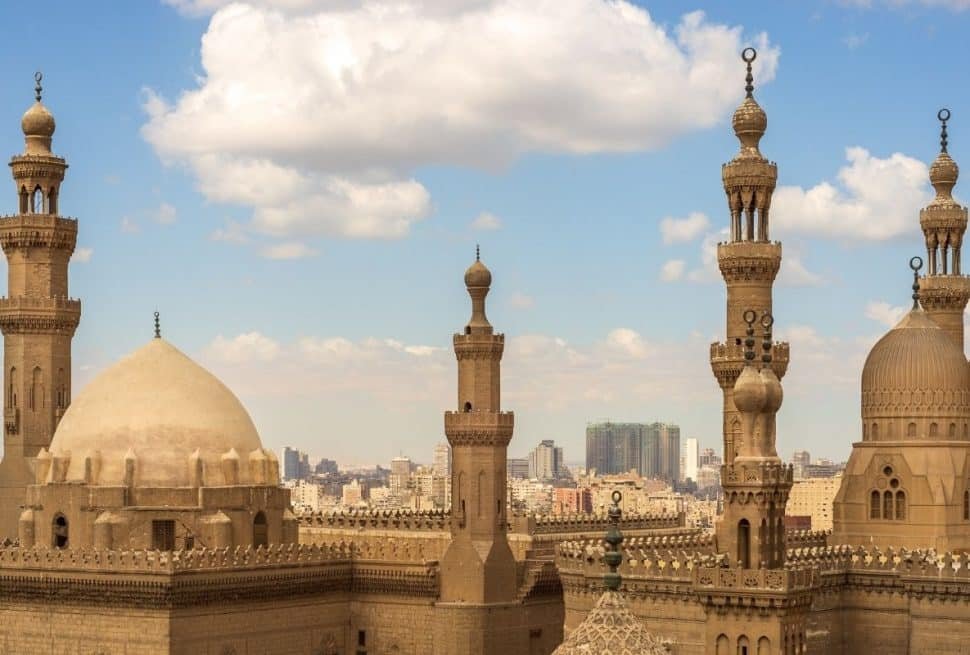
One of the most impressive features of the Egyptian capital is its extraordinary Islamic heritage.
The city has been an important center of Islamic culture and learning for centuries. Its historic mosques represent different periods of Egyptian and Islamic history and are admired for their architecture, courtyards, domes, minarets, and decorations.
Al-Azhar Mosque
Al-Azhar Mosque is one of the best-known religious landmarks in the capital.
It is closely connected with Al-Azhar, one of the world’s most respected centers of Islamic learning. The mosque has developed over centuries and remains an important part of the city’s religious and cultural identity.
Mosque of Amr Ibn Al-As
The Mosque of Amr Ibn Al-As is located in Old Cairo and is one of Egypt’s most important early Islamic landmarks.
The mosque was founded in 641 and has been expanded and reconstructed several times throughout its long history.
Its location in the historic area of Al-Fustat makes it particularly interesting for visitors who want to discover the beginnings of Islamic history in Egypt.
Ibn Tulun Mosque
Ibn Tulun Mosque is another remarkable example of Islamic architecture.
Dating from the ninth century, it is famous for its large open courtyard, distinctive architectural design, and unusual spiral minaret.
The peaceful atmosphere and impressive architecture provide a striking contrast to the busy streets outside.
Sultan Hassan Mosque
The Mosque and Madrasa of Sultan Hassan is one of the most impressive medieval monuments in the city.
Built during the Mamluk period in the 14th century, the complex is famous for its enormous scale and detailed architectural design.
Together with other historic monuments, it demonstrates the importance of the Egyptian capital as a center of Islamic architecture and learning.
Why Is Traffic So Heavy?
Traffic is one of the most noticeable parts of everyday life in the Egyptian capital.
Millions of residents and visitors travel across the metropolitan area every day. Cars, taxis, buses, motorcycles, and other vehicles share the city’s roads.
Traffic can become particularly heavy during the morning and evening rush hours.
According to the 2025 TomTom Traffic Index, the city recorded an average congestion level of 40.5%. The same data reported an average journey time of approximately 22 minutes and 23 seconds for 10 kilometers.
These figures help explain why a destination that looks close on a map can sometimes take much longer to reach by car.
Travel times can change considerably depending on the time of day, neighborhood, road conditions, and route.
For visitors, allowing extra travel time is often a good idea when planning a busy sightseeing day.
Everyday Life in the Egyptian Capital
Traffic is only one part of the experience of living in such a large urban area.
The streets are full of activity. People walk between shops, vendors sell food and drinks, taxis move through crowded roads, buses carry passengers, and families go about their daily routines.
For travelers, this constant movement can become one of the most memorable parts of the experience.
The city does not always feel quiet or relaxed. Instead, it has a strong sense of energy. Car horns, conversations, street vendors, traffic, and the sounds of everyday life create an atmosphere that is very different from many other destinations.
This is also why exploring the capital with enough time is important. The experience is not only about visiting individual attractions. It is also about seeing how Egyptians live, work, travel, eat, and socialize.
The Nile River
The Nile River is an essential part of the identity of Egypt’s capital.
The river passes through the metropolitan area and separates important districts while bridges connect different parts of the urban region.
The relationship between the Nile and Egypt goes far beyond geography. The river has played a central role in the country’s history, agriculture, transportation, and development for thousands of years.
Today, visitors can enjoy views of the river from bridges, riverside areas, restaurants, hotels, and boats.
The Nile also provides a welcome contrast to the busy streets and crowded roads of the capital.
Why Visit Cairo?
There are many reasons to visit Cairo, but perhaps the greatest is its variety.
A visitor can spend the morning exploring ancient or Islamic monuments, enjoy traditional Egyptian food for lunch, walk through historic streets in the afternoon, and experience the modern city in the evening.
The destination also offers an opportunity to experience Egyptian life beyond the most famous tourist attractions.
Historic neighborhoods contain traditional architecture and narrow streets, while modern districts feature wide roads, shopping centers, restaurants, hotels, and contemporary buildings.
The combination of history and everyday life makes this destination different from a place that exists only for tourism.
It is a city where visitors can learn about Egypt’s past while experiencing the rhythm of modern Egyptian life.
Frequently Asked Questions About Cairo
Is Cairo a large city?
Yes. It is a very large urban center. Cairo Governorate covers approximately 3,085 square kilometers, while the wider metropolitan area extends far beyond those administrative boundaries.
What is the population of Cairo?
Cairo Governorate had an estimated population of approximately 10.48 million people in January 2026. The wider urban agglomeration had an estimated population of approximately 26 million in 2025 according to United Nations data.
Why is Cairo famous for mosques?
The city has been an important center of Islamic culture and learning for centuries. It contains numerous historic mosques representing different periods of Egyptian and Islamic history.
Is traffic heavy in Cairo?
Yes. Traffic can be particularly heavy during morning and evening rush hours. The enormous population and extensive metropolitan area result in millions of daily journeys.
What are some famous mosques in Cairo?
Some of the best-known historic mosques include Al-Azhar Mosque, the Mosque of Amr Ibn Al-As, Ibn Tulun Mosque, and the Mosque and Madrasa of Sultan Hassan.
Is Cairo worth visiting?
Absolutely. The city offers a unique combination of history, Islamic architecture, Egyptian culture, food, the Nile River, traditional neighborhoods, and modern urban life.
Final Thoughts
Cairo is a city of enormous size, population, history, and energy.
With more than 10 million residents inside its governorate and a much larger population across the metropolitan area, it is easy to understand why the capital can feel crowded and busy.
Its traffic can sometimes be challenging, but the same busy streets are part of what makes the destination so lively. Its historic mosques, traditional neighborhoods, modern districts, and the Nile River create a place where the past and present exist side by side.
For travelers, visiting the Egyptian capital is about much more than famous monuments. It is an opportunity to experience a living Egyptian city, discover its Islamic heritage, taste its food, explore its streets, and see everyday life in one of the world’s most fascinating urban centers.