Egypt is one of the world’s most fascinating destinations for travelers interested in history, culture, and religion.
Religion in Egypt has shaped the country’s architecture, traditions, festivals, art, and daily life for thousands of years.
Today, Egypt is a predominantly Muslim country with a long and important Christian heritage, particularly through the Coptic Orthodox Church. The country also has a historic Jewish heritage that forms part of Egypt’s broader religious and cultural story.
For tourists, understanding Religion in Egypt can make visits to mosques, churches, monasteries, synagogues, and other religious landmarks more meaningful.
This guide explains the major religions in Egypt, important religious sites, local customs, appropriate dress, Ramadan, and practical tips for visiting places of worship.
Table of Contents
- Religion in Egypt: An Overview
- Islam in Egypt
- Coptic Christianity in Egypt
- Jewish Heritage in Egypt
- Important Religious Sites in Egypt
- Religious Complex in Old Cairo
- Religion and Daily Life in Egypt
- Visiting Religious Sites as a Tourist
- Ramadan and Visiting Egypt
- Frequently Asked Questions
- Final Thoughts
Religion in Egypt: An Overview
Religion in Egypt is an important part of the country’s identity and cultural heritage.
Egypt is predominantly Muslim, while Christianity has a long-established presence, particularly through the Coptic Orthodox community. There is also a historic Jewish heritage represented by surviving synagogues and other sites.
The Egyptian government and official tourism authorities promote religious tourism that includes Islamic, Christian, and Jewish heritage sites.
These include historic mosques, churches, monasteries, synagogues, and sacred locations associated with important religious traditions.
For travelers, this means that a trip to Egypt can include much more than ancient Egyptian temples and pyramids.
You can explore centuries of Islamic architecture in Cairo, visit historic Coptic churches, discover ancient monasteries, and see Jewish heritage sites in Cairo and Alexandria.
Islam in Egypt
Islam has played a central role in Egyptian history and culture since its arrival in Egypt in the 7th century.
Today, the majority of Egypt’s population is Muslim, with Sunni Islam being the predominant tradition.
Islamic heritage can be seen throughout Egyptian cities, particularly in Cairo.
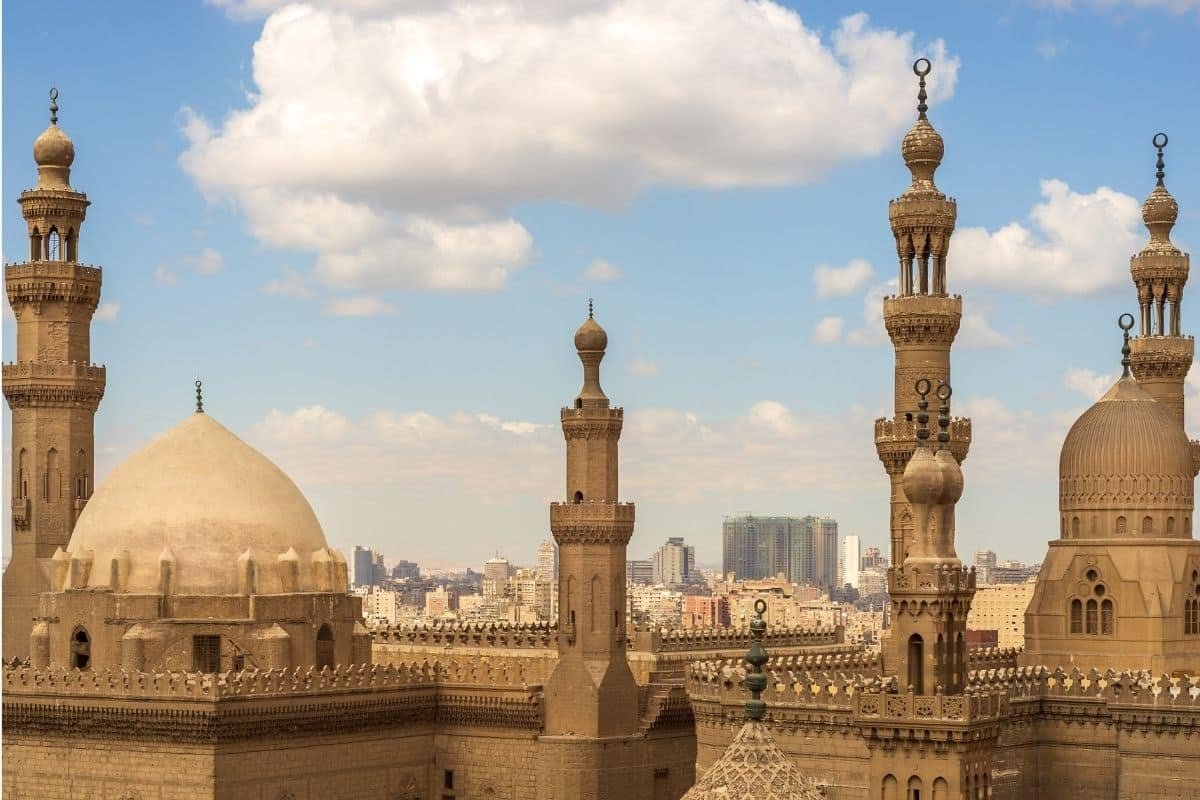
The capital contains historic mosques, madrasas, mausoleums, gates, markets, and streets that reflect different periods of Islamic architecture.
Important Islamic Sites in Egypt
Some of the most notable Islamic sites for visitors include:
- Al-Azhar Mosque
- Sultan Hassan Mosque
- Al-Rifa’i Mosque
- Ibn Tulun Mosque
- Amr Ibn Al-As Mosque
- Al-Hussein Mosque
- Al-Muizz Street
- The Citadel of Cairo
Many of these sites are located close to one another, making Islamic Cairo an excellent area to explore on foot.
The official Egyptian tourism portal highlights several of these sites as important examples of the country’s Islamic heritage.
Al-Azhar Mosque
Al-Azhar is one of Cairo’s most famous religious and educational landmarks.
The mosque is closely associated with Al-Azhar University and has played an important role in Islamic scholarship for centuries.
Visitors should remember that it remains an active place of worship.
Amr Ibn Al-As Mosque
Located in Old Cairo, the Amr Ibn Al-As Mosque is traditionally recognized as the first mosque established in Egypt.
The mosque is part of the historic Religious Complex area and remains one of Cairo’s most important Islamic landmarks.
If you want to explore Cairo’s religious and historical heritage, consider adding Cairo tours to your Egypt itinerary.
Coptic Christianity in Egypt
Christianity has deep roots in Egypt.
The Coptic Orthodox Church traces its history in Egypt to the tradition of Saint Mark’s arrival in Alexandria during the first century.
The Coptic tradition is therefore an important part of the country’s religious and cultural heritage.
Today, the majority of Egyptian Christians belong to the Coptic Orthodox Church, although other Christian denominations are also present in the country.
Important Coptic Sites in Egypt
Travelers interested in Coptic Christianity can visit:
- The Hanging Church
- Abu Serga Church
- The Coptic Museum
- Saint Barbara Church
- St. Mercurius Church
- Monastery of St. Catherine
- Monastery of St. Anthony
- Monastery of St. Paul
- Wadi El Natrun monasteries
The official Experience Egypt tourism portal highlights these locations as important parts of Egypt’s Coptic heritage.
The Hanging Church
The Hanging Church, officially known as the Church of the Virgin Mary, is one of the best-known Coptic churches in Old Cairo.
It was built above one of the gates of the ancient Babylon Fortress.
The church is part of the historic Religious Complex and is one of the most visited Christian heritage sites in Cairo.
The Coptic Museum
The Coptic Museum is located within the historic Babylon Fortress area in Old Cairo.
According to Egypt’s Ministry of Tourism and Antiquities, the museum houses the world’s largest collection of Coptic artifacts and traces the development of Coptic history and art in Egypt.
The collection also demonstrates how Coptic art developed through interaction with Pharaonic, Greek, Roman, Byzantine, and Islamic cultures.
For visitors interested in Religion in Egypt, the Coptic Museum provides useful context before or after exploring Old Cairo’s churches.
Jewish Heritage in Egypt
Although Egypt’s Jewish community is now very small, Jewish heritage remains an important part of the country’s history.
Historic Jewish sites can be found particularly in Cairo and Alexandria.
One of the best-known examples is the Ben Ezra Synagogue in Old Cairo.
The synagogue is located within the historic area traditionally associated with the Religious Complex.
Egypt’s official tourism information also identifies historic synagogues in Cairo and Alexandria as part of the country’s religious heritage.
For travelers interested in the wider history of Religion in Egypt, Jewish heritage provides another important perspective on the country’s multicultural past.
Important Religious Sites in Egypt
Egypt has religious landmarks across the country.
Some of the most important areas for tourists include:
Cairo
Cairo offers an extraordinary concentration of Islamic, Coptic, and Jewish heritage.
You can visit mosques, churches, museums, synagogues, historic streets, and religious monuments within relatively short distances.
Alexandria
Alexandria has a long multicultural history and contains important Christian and Jewish heritage.
The city is also home to historic religious buildings that reflect its diverse past.
Sinai
Sinai is particularly significant in the religious history of the region.
Mount Sinai and Saint Catherine’s Monastery are among the best-known religious destinations in the area.
Experience Egypt describes Saint Catherine’s Monastery as one of the world’s oldest continuously functioning Christian Orthodox monasteries.
Upper Egypt
Upper Egypt contains important monasteries and churches, including sites associated with the Christian monastic tradition.
The official tourism portal highlights Al-Muharraq Monastery in Asyut and other Christian heritage sites in Upper Egypt.
Religious Complex in Old Cairo
One of the best places to experience the diversity of Religion in Egypt is the Religious Complex in Old Cairo.
The area contains important Christian and Islamic monuments within a relatively compact historic district.
Among the landmarks found in or around the complex are:
- Babylon Fortress
- Hanging Church
- Abu Serga Church
- St. Barbara Church
- Abu Sefein Church
- Amr Ibn Al-As Mosque
- Coptic Museum
- Ben Ezra Synagogue
Cairo’s official tourism portal provides detailed information about these monuments and their historical significance.
Why Visit the Religious Complex?
The Religious Complex is particularly valuable for travelers who want to understand how different religious traditions have shaped Cairo.
Rather than visiting each monument in isolation, you can experience several layers of Egyptian history within the same historic area.
A local guide can also help explain the historical context behind the buildings and traditions.
Religion and Daily Life in Egypt
Religion influences many aspects of everyday life in Egypt.
You may notice its influence in architecture, family traditions, holidays, food, clothing, business hours, and social customs.
For tourists, the most noticeable religious influence may be the rhythm of daily life during Islamic holidays and Ramadan.
Egyptians may also have different customs around religious celebrations, family gatherings, and places of worship.
Respecting these traditions is an important part of being a considerate visitor.
Visiting Religious Sites as a Tourist
Visiting mosques, churches, monasteries, and synagogues is possible for tourists, but visitors should respect the character of each place.
Dress Modestly
When visiting religious sites, dress conservatively.
Cover your shoulders and knees, particularly when visiting mosques and churches.
The official Experience Egypt travel guidance recommends modest clothing and notes that visitors may need to cover their arms and legs when visiting mosques, churches, and synagogues.
Women may also be asked to cover their hair when entering certain mosques.
Remove Your Shoes When Required
Some mosques require visitors to remove their shoes before entering prayer areas.
Follow signs and instructions from staff or your guide.
Avoid Disturbing Worshippers
Many religious sites are active places of worship.
Avoid taking photographs during prayers unless photography is clearly permitted.
Keep your voice low and follow instructions from site staff.
Ask Before Taking Photos
Photography rules can vary between religious sites.
If you’re unsure, ask before photographing people, religious ceremonies, or sensitive areas.
Ramadan and Visiting Egypt
Ramadan is the Islamic holy month and an important period in Egyptian life.
During Ramadan, Muslims fast from dawn until sunset.
The dates of Ramadan change each year because they follow the Islamic lunar calendar.
For tourists, the experience can be different from traveling during other periods of the year.
Many restaurants and businesses adjust their schedules, and evenings can become particularly lively after sunset.
The UK government’s current Egypt travel guidance advises visitors to respect local customs during Ramadan and notes that eating, drinking, or smoking in public during daylight hours can be culturally insensitive.
Tips for Tourists During Ramadan
If you’re visiting Egypt during Ramadan:
- Dress modestly.
- Be respectful around people who are fasting.
- Avoid eating or drinking openly in public during daylight hours.
- Check restaurant opening times.
- Expect some businesses to adjust their schedules.
- Ask your hotel or guide about local arrangements.
You don’t need to fast yourself as a tourist.
The important thing is to understand and respect the local environment.
Religion in Egypt and Tourist Etiquette
Understanding Religion in Egypt doesn’t mean that tourists need to follow local religious practices.
It simply helps you understand the cultural environment and behave respectfully.
A few simple rules can make your experience much easier.
Respect Places of Worship
Treat mosques, churches, monasteries, and synagogues as religious spaces rather than ordinary tourist attractions.
Dress Appropriately
Conservative clothing is the safest choice when visiting religious landmarks.
Follow Local Instructions
If staff ask you to stop taking photographs, remove your shoes, or avoid a particular area, follow their instructions.
Be Careful With Religious Discussions
Religion can be a personal subject.
Visitors should avoid making disrespectful comments about religious beliefs, symbols, or practices.
The goal is to learn and experience rather than judge.
Best Religious Experiences for Tourists in Egypt
If you want to include religious heritage in your itinerary, consider these experiences:
Islamic Cairo
Explore historic mosques and Islamic architecture around Al-Muizz Street and the surrounding area.
Old Cairo
Visit the Hanging Church, Coptic Museum, Abu Serga Church, and other historic monuments around the Religious Complex.
Saint Catherine’s Monastery
Explore one of Egypt’s most important Christian monastic sites in the Sinai region.
Wadi El Natrun
Discover historic Coptic monasteries and learn about Egypt’s long monastic tradition.
Mount Sinai
Visit one of the most significant religious landscapes in the Sinai Peninsula.
Religious Heritage Tour
You can also combine several religious landmarks into a private Cairo sightseeing experience.
For example, Egypt Unlocked offers Cairo tour experiences that can be customized around historical and cultural interests.
Best Time to Explore Religious Sites in Egypt
Religious sites can generally be visited throughout the year, but weather can influence the overall experience.
The cooler months are often more comfortable for walking around outdoor archaeological areas and historic districts.
October through April is generally a popular period for sightseeing in Egypt because temperatures are more comfortable than during the hottest summer months.
If you’re planning your trip around weather, crowds, and prices, see our detailed best time to visit Egypt guide.
Frequently Asked Questions
What is the main religion in Egypt?
Egypt is predominantly Muslim, with Sunni Islam being the majority tradition.
Christianity, particularly Coptic Orthodox Christianity, also has a long and significant history in Egypt.
What is Coptic Christianity?
Coptic Christianity refers primarily to the Christian tradition associated with the Coptic Orthodox Church of Alexandria.
The tradition traces its Egyptian roots to the early Christian period and the tradition of Saint Mark’s arrival in Alexandria.
Can tourists visit mosques in Egypt?
Yes.
Many historic mosques are open to visitors outside prayer times, although rules can vary.
Visitors should dress modestly and follow instructions from staff.
Can tourists visit churches in Egypt?
Yes.
Many historic churches welcome visitors.
Remember that churches remain places of worship, so behave respectfully and follow local rules.
What should tourists wear when visiting religious sites in Egypt?
Modest clothing is recommended.
Cover your shoulders and knees, particularly when visiting mosques, churches, and other religious locations.
Can women enter mosques in Egypt?
Yes.
Women can visit many mosques, although specific arrangements can vary by location.
A head covering may be required in some places.
Is Ramadan a good time to visit Egypt?
Egypt can be visited during Ramadan, but travelers should understand that daily schedules and customs may change.
Visitors should be respectful of people fasting and check restaurant and attraction schedules before traveling.
What religious sites should I visit in Cairo?
Some notable choices include the Religious Complex in Old Cairo, the Hanging Church, Coptic Museum, Abu Serga Church, Amr Ibn Al-As Mosque, Al-Azhar Mosque, Ibn Tulun Mosque, and other historic Islamic monuments.
Final Thoughts
Religion in Egypt is deeply connected to the country’s history, architecture, culture, and daily life.
From the historic mosques of Islamic Cairo to the ancient Coptic churches of Old Cairo, Egypt offers travelers an opportunity to explore centuries of religious heritage.
The country’s religious story also includes Jewish heritage and sacred landscapes across Sinai and other regions.
Visiting these places can add an entirely different dimension to your Egypt trip.
The key is to approach religious sites with curiosity and respect.
Dress modestly, follow local rules, ask before taking photographs, and remember that many of these monuments remain active places of worship.
If you’re planning a trip to Egypt and want to explore its history and culture with local experts, explore Egypt Unlocked’s Egypt tours.
You can also contact Egypt Unlocked to discuss your itinerary and create an experience that matches your interests.
Explore More Egypt Travel Guides
- Dress modestly (shoulders and knees covered)
- Remove your shoes before entering a mosque
- Women may need to cover their hair in some mosques
- Be quiet and respectful during prayer times
During Ramadan, try not to eat or drink in public in traditional areas during daylight hours out of respect.
Religion in Egypt is not only about faith — it is deeply connected to the country’s history, art, architecture, and hospitality. Learning a little about it will make your trip more meaningful.
External link: Official Coptic Orthodox Church website or a reputable page about Islam in Egypt.
Image alt text: “Religion in Egypt – Mosque and Coptic Church”